

Let’s be honest – most of us don’t think twice about what our underwear is actually made of. You grab something in your size, it looks fine, you buy it. And then three weeks later you’re itching, sweating, or just… uncomfortable for reasons you can’t quite put your finger on. Sound familiar ?
Turns out, the fabric touching your skin all day long matters a lot more than the label on the front. And that’s exactly where natural, eco-responsible materials come in. If you’ve been curious about making the switch, or just wondering whether it’s actually worth the hype, this is for you. There’s a whole world of sustainable and natural living resources out there – places like https://nature-dailleurs.com are a good starting point if you want to go deeper into the philosophy behind choosing natural over synthetic.
What “natural fabric” actually means in lingerie
 Not all natural fibres are equal. And honestly, the term gets thrown around a lot in marketing without much substance behind it. So let’s break it down quickly.
Organic cotton is probably the most common. It’s soft, breathable, hypoallergenic, and it absorbs moisture really well. For everyday briefs or bralettes, it’s hard to beat. The difference between regular cotton and organic cotton ? The second one is grown without synthetic pesticides or fertilisers – better for your skin, better for the planet.
Bamboo is the one that surprised me the most, personally. It feels almost silky against the skin, it’s naturally antibacterial, and it regulates temperature better than most synthetics. I was sceptical at first – “bamboo underwear” sounds like something from a wellness catalogue – but once you try it, you kind of don’t want to go back.
Modal is another one worth knowing. It’s derived from beech tree pulp, incredibly soft and lightweight. It drapes well, doesn’t shrink as much as cotton, and it stays soft wash after wash. Great for sleep sets and delicate pieces.
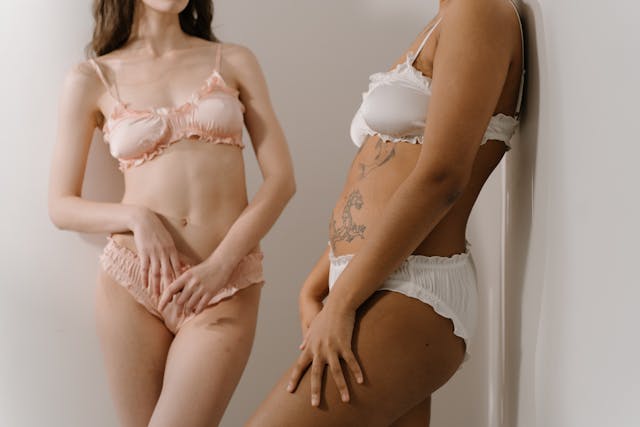
Silk… well, silk is silk. Luxurious, yes. High maintenance, also yes. But if you have very sensitive skin, it’s genuinely one of the best options out there. It’s naturally temperature-regulating and produces almost zero friction.
Why does it actually change comfort – day to day ?
Here’s the thing. Synthetic fabrics like polyester or nylon don’t breathe. They trap heat and moisture. Over hours of wear, that creates the perfect environment for irritation, odours, and that general feeling of just being uncomfortable in your own skin.
Natural fabrics do the opposite. They let air circulate. They wick moisture away from the skin rather than locking it in. And because they don’t contain synthetic dyes and chemical finishing agents as frequently as cheaper mass-market pieces, they’re much less likely to cause reactions on sensitive skin.
Think about it – you’re wearing lingerie for potentially 12 to 16 hours a day. Even a small improvement in breathability or softness has a cumulative effect on how you feel. It’s not dramatic. It’s subtle. But it’s real.
Is eco-responsible lingerie actually more comfortable, or is that just marketing ?
Fair question. And the honest answer is : it depends on the brand and the construction. Not every “natural” label automatically means comfortable. You still need to look at the cut, the elastics, the seams.
But generally speaking ? Yes. Brands that invest in certified organic or sustainably sourced fabrics tend to also pay more attention to the overall quality of construction. The elastic bands are softer. The seams are flatter. The sizing is more consistent.
There’s also the question of certification. Look for things like GOTS (Global Organic Textile Standard) or OEKO-TEX Standard 100. These aren’t just marketing badges – they mean the fabric has been tested and verified for harmful substances. That matters when something is in contact with your skin all day.
What about price – is it worth paying more ?
 Frankly, yes. Up to a point.
Natural and certified fabrics cost more to produce. That’s just reality. So you will pay more for a good organic cotton brief than for a three-pack from a fast fashion brand. But consider the longevity – a well-made piece in quality cotton or modal will outlast several synthetic alternatives easily.
Also, and maybe this is a bit of a personal take, but I think there’s something to be said for wearing less but better. Three pairs of underwear you actually love wearing versus a drawer full of things that irritate you by midday.
Where to start if you’re making the switch
You don’t need to overhaul your entire lingerie drawer at once. Start with what you wear most often – everyday briefs, a comfortable bralette, maybe a sleep set. Swap those first.
Look for organic cotton or bamboo blends for everyday wear. If you want something a bit more elevated, modal is worth trying. And if you have sensitive skin or a known fabric allergy, check the certifications before buying – not just the fabric name.
The difference might seem small at first. But after a week of wearing something that actually breathes, doesn’t itch, and feels genuinely soft ? You’ll wonder why you didn’t make the switch sooner.